Memoirs – Why We Write Them & How You Can Make Them Sell
By Jennifer S. Wilkov, host of the “Your Book Is Your Hook!” Show on WomensRadio
The Literary Agent Matchmaker™
As authors and writers, we’re always learning about resources and industry tools that we can use to improve our book project performance and the enjoyment of our writing and marketing experiences. Today let’s talk about memoirs and why we write them.
As a new friend of mine likes to say, “It is all about me, isn’t it?”
When it comes to memoirs, the response I give to writers is…No, not exactly. It’s also about the reader.
I really enjoy working with memoir writers as a consultant. The biggest disconnect I often have to address for the writer is:
1) WHO are you writing your memoir for?
and…
2) WHY are you writing it?
Oftentimes, the answers to these two questions will also determine whether your memoir will sell.
See, as a memoir writer, you must write it for you – to document, clear, understand and process what has happened to you. A memoir by its very nature is cathartic.
If you want to do this for your own health and well-being, then go for it! I cheer you on and I applaud you for it.
If you want it to be a wildly successful book for others to invest 8 hours or so of their lives to read and benefit from yours, you may want to give it a bit more thought.
How you write your memoir and who you write it for will make a difference in whether a literary agent will want to represent your book and whether a publisher sees the value in publishing it.
Here are some guidelines to help you:
1) Memoirs that are incident-based are more interesting to most people and most industry
professionals. Books by business people like Sir Richard Branson or even some celebrities such as Jenny McCarthy’s book, Louder Than Words: A Mother’s Journey to Healing Autism or your favorite musician are not about their whole entire life from the moment they took their first breath. They are about the particular part of their lives they want to highlight and share.
The focus is on their career or a particular topic or time in their lives. The book and story serves the reader in some enlightening or entertaining way and has a clear beginning, middle and end.
2) Be honest. No one wants to invest their emotions, time and money into reading a book and connecting with a story that is supposed to be true only to discover that it’s not. It’s not only disappointing for the reader, it creates a lot of disgust too. Just look at the reactions to what happened when questions were raised about Greg Mortenson’s book, Three Cups of Tea, James Frey’s A Million Little Pieces, and books from other writers that weren’t true.
3) Determine if there is something more you can offer than just your story such as insights into what you learned and how the readers might practically apply this to their own lives.
4) Decide if you want to share more than just your story. Do you intend to write more books? Books that take off from your story? A memoir is also a great start to a career or a compliment to boost your career as a speaker.
If you intend to do more with your story than just tell it, write it in a way that it can be leveraged. Think twice about your title, subtitle and chapter titles.
5) Be responsible with family members and friends, especially if you want to take your memoir to film or television. If your memoir includes anecdotes about members of your family, close friends or co-workers, or if it reveals family secrets that others may want to keep hidden from the public, think twice about making your book a memoir. You may want to discuss that you are writing the book with the folks you intend to mention to at least make them aware of it and, if plausible, gain their support.
If you intend to pitch your book to the film or television industries, keep in mind that the producers may want a release signed by each person you name in the book to avoid legal issues or delays with the film later on.
6) Invest in a great editor before you attempt to get published. Many writers make the mistake of not having their memoir reviewed by an editor prior to seeking a literary agent or publisher. Although you may want to “say it the way you say it,” if your grammar, spelling, punctuation and line of thought are off or distracting in your manuscript, no one is going to enjoy reading it.
If you value your story and your work, take the time and invest the money in a solid round of editing by a professional. This is not the area to cut corners or ask a favor from someone you know who teaches English during the school year to high school kids.
A memoir can be written in such a way that it benefits both you and the reader.
Your book can also be your hook to bigger opportunities and career growth.
The truth about memoirs is, like any bestseller, first you need to write a great book. Begin with the end in mind. Consider how your tale benefits others. Evaluate what you want to do with it and how you intend to contribute to the Greater Good with it.
Whether your story educates, enlightens or entertains the reader, when you write your story, there is no doubt you will leave a legacy for yourself, your family, and the human race.
How you choose to leave that legacy via the publishing world is entirely up to you.
If you want to be published with your memoir and have a literary agent represent you, use these simple guidelines to help you get a leg up with your book.
Pseudonyms – Using A Pen Name & The Writers Hidden Behind Them
By Jennifer S. Wilkov, host of the “Your Book Is Your Hook!” Show on WomensRadio
The Literary Agent Matchmaker™
As authors and writers, we’re always learning about resources and industry tools that we can use to improve our book project performance and the enjoyment of our writing and marketing experiences. Today let’s talk about why some writers use pen names.
A pen name or “nom de plume” is a pseudonym adopted by an author for their written work. As Wikipedia explains, “A pen name may be used to make the author’s name more distinctive, to disguise his or her gender, to distance an author from some or all of his or her works, to protect the author from retribution for his or her writings, or for any of a number of reasons related to the marketing or aesthetic presentation of the work. The author’s name may be known only to the publisher, or may come to be common knowledge.”
Sometimes authors use a pen name to avoid being confused with another writer with the same name. Other writers may write in more than one genre and may choose to use a pen name for each type of story or book.
Some pen names you may know and recognize include:
Samuel Langhorne Clemens – who wrote under the aliases “Mark Twain” and “Sieur Louis de Conte.”
Charles Dodgson – the mathematician and fantasy writer who wrote nonfiction under his own name and who wrote fiction with the alias “Lewis Carroll.”
Stephen King – published four novels under the name “Richard Bachman” because publishers didn’t feel the public would buy more than one novel per year from a single author.
C.S. Lewis – the famous author of The Chronicles of Narnia used two different pseudonyms: “Clive Hamilton” for his poems and “N. W. Clerk” for his book about grief and bereavement.
Eric Blair – used the pseudonym “George Orwell” for most of his books because he felt he wasn’t established enough in his writing career to publish under his real name.
Some famous female writers have used pen names for a variety of reasons too:
Mary Ann Evans – wrote as “George Eliot” in the 19th century to be perceived as a male writer to ensure that her work would be accepted by publishers and/or the public.
Charlotte Bronte – published Jane Eyre under the pseudonym “Currer Bell.”
Emily Bronte – published Wuthering Heights under the pseudonym “Ellis Bell.”
Jane Austen – used the pseudonym “A Lady” as the author of her first novel, Sense and Sensibility.
Karen Blixen – Baroness Karen von Blixen-Finecke originally published the popular story of Out of Africa under the pseudonym “Isak Dinesen.”
Nora Roberts – who writes romance under her own name writes erotic thrillers using the alias “J.D. Robb.”
There are also series of books that you may have grown up with that are published using a pseudonym to represent several authors such as:
Nancy Drew – these mystery books are published as though they were written by Carolyn Keene
The Hardy Boys – these books are published as the work of Franklin W. Dixon
The Bobbsey Twins – this series is credited to Laura Lee Hope
Even the moniker “nom de plume,” while appearing as French, did not originate in France. H. W. Fowler and F. G. Fowler, in The King’s English state that the term nom de plume “evolved” in Britain, where people wanting a “literary” phrase, failed to understand the term nom de guerre, which already existed in French. Since guerre means war in French, nom de guerre did not make sense to the British, who did not understand the French metaphor. The term “nom de plume” was later exported to France.
Some authors like this week’s author guest, C.E. Lawrence, choose to use initials in their pen names for their work. Others use initials to abbreviate and disguise their real names (which are not considered pseudonyms) such as:
S. E. Hinton – Susan Eloise Hinton, the author of The Outsiders
J. K. Rowling – Joanne “Jo” Rowling, the author of Harry Potter, who incidentally had no middle name. She chose the “K” as the second initial of her pen name from her paternal grandmother Kathleen Ada Bulgen Rowling. She used the two initials because her publishers demanded it, fearing that the target audience of young boys might not want to read a book written by a woman,
Other authors have used pen names for other reasons such as:
Joseph Conrad – the British author of Heart of Darkness whose given Polish name was Józef Teodor Konrad Korzeniowski, too hard to pronounce, spell or remember and too long to print.
Silence DoGood – the pseudonym of Benjamin Franklin that he used to write letters to The New England Courant newspaper owned by his brother. Franklin created Silence DoGood as the persona of a middle-aged widow and the letters he wrote poked fun at the various aspects of life in colonial America.
O. Henry – William Sydney Porter’s pseudonym under which he wrote famous short stories like The Gift of the Magi. His moniker was applied to other writers’ works and became referred to as an “O. Henry ending,” pointing to his gift for the surprise endings to his stories.
Pseudonyms extend to children’s books and the comic book world too through:
Stan Lee – Stanley Martin Lieber, the comic book pioneer. He was the former president and chairman of Marvel Comics. In collaboration with several artists, he created Spider-Man, the Fantastic Four, the X-men, the Avengers, Iron Man, the Hulk, Thor, Daredevil, Doctor Strange and many others.
Dr. Seuss – Theodor Seuss Geisel, the beloved writer and cartoonist who published 46 children’s books which were often characterized by imaginative characters and rhymes. He began using his pen name long before his books though when an incident in college had the dean force him to resign from all extracurricular activities including writing for the college humor magazine. At that time, he continued writing for the magazine and signed his work under his first pen name, “Seuss.”
There are many reasons why you may want to use a pen name for your work. As you can see, you won’t be the first, and you certainly won’t be the last.
As history has shown, even with a pen name, you can still use your book as your hook – and become a beloved writer.
Jennifer’s show can be heard every week on Tuesday mornings at 9am when it is broadcast on WomensRadio.com and syndicated on Google News and Live365.com. Each show is archived for replay listeners in different time zones and countries.
For more information on this Education Corner topic and others, please refer to www.YourBookIsYourHook.com/blog for more articles and resources to help you with your books.
A Greater Purpose for Your Book and Film
By Jennifer S. Wilkov, host of the “Your Book Is Your Hook!” Show on WomensRadio
The Literary Agent Matchmaker™
As authors and writers, we’re always learning about resources and industry tools that we can use to improve our book project performance and the enjoyment of our writing and marketing experiences. Today let’s talk about how your book or film may serve a greater purpose.
It is our nature to care about ourselves and others. We write this into the plots of books and films. We hook the reader by engaging them in the lives of our characters and memoirs and what other nonfiction how-to books might do for them. We serve the readers with our souls while finding fulfillment ourselves.
Books and films have a wonderful way of extending themselves into greater efforts to help others. There is a natural segue that evolves when a book or film is affiliated with a charitable effort or organization. It doesn’t have to be directly in the book, but the book can become a hook for so much more and help others.
There are some books that are set up as a donation vehicle to a particular organization such as the way the Chicken Soup for the Soul® books are crafted, where money is donated to a chosen charity for
each book based on its theme. Other books are deemed an affiliated effort with a charity by the publisher such as books published by Morgan James Publishing which offers a donation form at the back of their books for Habitat for Humanity or at the discretion of the author such as Brendon Burchard’s Life’s Golden Ticket where a portion of the proceeds from the book are donated to Kiwanis International, Junior Achievement, and the YMCA.
There are lots of other ways writers, authors, screenwriters and filmmakers can have a greater purpose and make a bigger difference with books and films today. Here are some more great examples of how others are doing just this:
Karin Slaughter, a New York Times and #1 internationally best-selling author, is spearheading the SaveTheLibraries.com campaign and events all over the United States. She was recognized for her efforts in conjunction with this campaign and Reading Is Fundamental by the International Thriller Writers organization with their 2011 Silver Bullet Award earlier this month during their ThrillerFest Writers Conference in New York.
This week’s show guests Jonathan and Deborah Flora, the co-producers of the film Lt. Dan Band: For the Common Good, saw what actor Gary Sinise was doing with a band he formed after the name of his character in the movie
Forrest Gump and how he was entertaining our troops to support them. Jonathan is a veteran of the U.S. Army’s 82d Airborne Division and served 12 years in the military. He and Deborah thought Gary’s efforts were something worth documenting so they made a film about his tour. Then they went one step further and turned it into a vehicle for donations to support the troops so viewers can contribute to these noble worldwide efforts.
This week’s author guest, Darryl Strawberry, wrote his memoir, Straw: Finding My Way, in which he shares his life’s transformations, struggles, tragedies and triumphs. Then he and his wife were so moved by what they saw one day after a visit to a school for autistic kids that they felt compelled to find a way to help them. So he set up a foundation so he could raise money and bring attention to the fight for autism.
After Hurricane Katrina hit, New York Times best-selling author Heather Graham created the Writers for New Orleans workshop weekend which she holds on Labor Day weekend every year to bring people back to New Orleans and to help stimulate the economy there.
In East Hampton every year there is the famous and this year the 63rd Annual Artists and Writers Charity Softball Game featuring Ken Auletta, Mike Lupica, Mort Zuckerman, Alec Baldwin and others to benefit local East Hampton charities.
Many writers like to get involved particularly with children and making sure they have access to books such as James Patterson’s ReadKiddoRead.com site which is dedicated to making kids readers for life.

I personally enjoy donating a portion of my sales of Boys Before Business: The Single Girl’s Guide to Having It All to the Sojourner Center in Arizona, which is the largest women’s shelter for domestic violence in the U.S.
I’m also a spokesperson for Project Night Night which hand delivers books into the hands of children in homeless shelters across the U.S. and I’m a proud supporter of Heifer International’s Read to Feed Program where kids in our schools are encouraged to read more books by getting pledges for each book
they promise to read and then providing that money to Heifer’s worldwide efforts to end hunger while caring for the Earth. I’m also involved now with starting a new chapter of First Book in Brooklyn, NY, which is a charity dedicated to putting new books into the hands of children in need in my community. You can find out if your community has a First Book chapter and get involved too.
And that is the question for you: as a writer, author, screenwriter or filmmaker: how do you give back and give more with your books and films?
Provide a local book signing for a charity of your choice or a free screening with a donation of your film.
Done with some of the books you’ve been reading? Donate them to a local library or charity who can provide them to someone else or that can charge a small fee for purchase as a donation to the charity such as the Housing Works Bookstore Café in New York City which supports those with AIDS and HIV.
Donate the books you’ve written or the DVD for a film you’ve made to a good cause such as a local shelter or school.

Want to support our troops too like Jonathan and Deborah Flora and Gary Sinise and his band? Donate books to Books for Soldiers, Operation Paperback or share your used Kindle with a soldier through E-Books for Troops.
There is so much you can do as an author, writer, screenwriter or filmmaker to make an even greater difference with your book and film. I encourage you to find ways to use your book as your hook for the greater good too.
Jennifer’s show can be heard every week on Tuesday mornings at 9am when it is broadcast on WomensRadio.com and syndicated on Google News and Live365.com. Each show is archived for replay listeners in different time zones and countries.
For more information on this Education Corner topic and others, please refer to www.YourBookIsYourHook.com/blog for more articles and resources to help you with your books.
Research: The Key to Your Writing & Publishing Career
By Jennifer S. Wilkov, host of the “Your Book Is Your Hook!” Show on WomensRadio
The Literary Agent Matchmaker™
As authors and writers, we’re always learning about resources and industry tools that we can use to improve our book project performance and the enjoyment of our writing and marketing experiences. Today let’s talk about research and why it is the key to your writing and publishing career.
Research. Research. Research. We’ve all heard this term and the phrase, “Do your research,” for years. From back when we were in school to today, this catch phrase always seems to play a role in what we want to do.
It’s no different in the book publishing industry. Here’s why research has such a big role in your writing and publishing career.
Writing
In order to write about anything, it’s best to get more familiar with it. Some say you should write about what you know. Others say that’s not true – you can go research something or someone that interests you and learn more about it. Then write about it. Both methods work.
However, even when you know about something or someone, it still helps to do more research on it because, after all, it’s hard to know everything. It’s also a chance to open up more opportunities and storylines as you get more and more enmeshed in the information.

For example, today’s author guest, Ellen Sussman, lived in Paris for a number of years prior to writing her new novel, French Lessons. When she did write this book, she went back to Paris to research the places she had written about to confirm they were appropriate for the story. What she found was that a few places needed to be changed because they were not as she had remembered them or they were not at all what she had expected.

In a recent conversation I had with David Morrell at ThrillerFest last week, he said he got his pilot’s license when he was writing about one of his characters who was flying a plane in one of his books so he could accurately account for the flying experience as a pilot, not just as a passenger guessing at what it’s like to fly.

Heather Graham has a great time researching locations all over the world that claim to have great ghosts in their midsts. She writes about her adventures on her website, http://theoriginalheathergraham.com, and she uses her experiences to fuel the stories in her wildly popular paranormal books.

Katharine Sands, a literary agent at the Sarah Jane Freymann Literary Agency, refers to herself as the agent provocateur as opposed to the author of her book, Making The Perfect Pitch: How to Catch a Literary Agent’s Eye. She interviewed other literary agents and added their insights and perspectives to her book as opposed to just writing it herself.
John Grisham researched the life and court transcripts for Ron Williamson for his book, The Innocent Man. He expresses gratitude for those who were willing to talk with him so he could conduct his research for his first nonfiction tale.
There are so many ways to do research for your book including unique opportunities like Lee Lofland’s Writer’s Police Academy, a truly original undertaking.. The Writers’ Police Academy offers the most hands-on, interactive and educational experience writers can find to enhance their understanding of all aspects of law enforcement and forensics.
Research is what’s behind the authenticity of your story. Even though you have so-called poetic license when writing, when you do your research well, the readers appreciate what you’ve written that much more and are not distracted by your lack of accuracy and knowledge.
Marketing
The platform for marketing your book runs the gamut from simple and sweet to large, expansive and complex. In order to determine what’s best for you, your book and platform, it’s best to do your research to find out what is involved in each component activity so you can understand what you are willing to do and what you might want someone else to do for you – or not do it at all.
So many new things are developing in the field of book marketing for your platform that your research is never really done here. A bit cliché but true. For example, while I was at ThrillerFest last week, I saw demonstrations of iDoLVine and Autography, two new products and services that are revolutionizing the virtual book signing experience. The presentation for these was truly eye-opening and the possibilities were endless. There will be more and more developments in the area of ideas for marketing your book. Not every one is for every book and author so research is the best way to manage your time, efforts, energy and money.
Getting published
The publishing process is a friendlier journey when you know more about it and do your research. Don’t just self, e- or traditionally publish your book because someone else did. Identify your goals for your book, understand your options and then choose the appropriate method that can best support you with achieving these goals.
Agents
If you want to begin a long lasting relationship with an agent, start it before you meet them by doing your research and getting to know all about them. Look, if you’re interested in someone, it’s best to find out what you can before you approach them or meet them. Your efforts to research them shows when that moment to meet finally them comes. This is especially true when it comes to finding an agent. Don’t just research the submission guidelines so you can slam them with your stuff. Research each agent you want to submit to or the ones you’re going to pitch at a writers conference or pitchfest. Understand who they are, what they want in the authors they represent, and then craft your pitch to answer their submission guidelines appropriately.
Literary agent Scott Eagan of Greyhaus Literary Agency recently wrote a great article about this very mistake he saw made during the recent Romantic Writers of America annual conference in New York. The title of Scott’s post was “Pitching at Conferences: My Point Was Proven!” and in it he says that at writers conferences “…most writers just grab any appointment slot they can get their hands on to sell their story. There is no ounce of research done. There is not thought to why they would pitch their story to a given agent or editor. They just grab. Needless to say, because there isn’t that careful thought, writers will more than likely see a rejection later on.”
If you want to win in the game of getting an agent, do your research and you’ll find you’ll have much greater success.
One word of caution here: In the agent search, also be aware of getting too caught up in the “finding an agent” process that you stop writing. It’s best to look for an agent while continuing to write your next book. In a recent article on writer Nina Badzin’s blog entitled, “Are You Addicted to Finding a Literary Agent?” Nina writes, “…instead of working with the new characters and plot you’ve imagined—you’re researching agents again. You haven’t written anything new in six months. Rejection is demoralizing, but starting over is terrifying. You’re sending out query letters to every new agent on the scene. You’re out of control. My friend, you’re addicted to finding a literary agent. You need help.”
Publishers
Publishers are like agents who become a business partner of yours for the life of your book. Before you jump into any business relationship, be smart and research each publisher you and, if you have one, your agent are approaching. Understand what imprints they have and why your book would be a good fit for them.
Don’t just leap at an offer. Be sure you’ve connected with the right agent and publisher for your book by doing your research to confirm it.
Research is a term that may seem overused in the book publishing industry, but it’s true in this case that you can never do enough of it. On the flip side, be aware of analysis paralysis when researching, as there is a point where you’ll need to stop researching and start writing or submitting to an agent or publisher.
In order to use your book as your hook more effectively, do your research to identify and connect with the right readers, the right agents, editors and industry professionals, and most of all with your great story and hook.
In the end, the time you invest in your research will pay off ten fold and more in appreciation of your efforts by others.
Jennifer’s show can be heard every week on Tuesday mornings at 9am when it is broadcast on WomensRadio.com and syndicated on Google News and Live365.com. Each show is archived for replay listeners in different time zones and countries.
For more information on this Education Corner topic and others, please refer to www.YourBookIsYourHook.com/blog for more articles and resources to help you with your books.
Why Libraries Need Authors & Authors Need Libraries
By Jennifer S. Wilkov, host of the “Your Book Is Your Hook!” Show on WomensRadio
The Literary Agent Matchmaker™
As authors and writers, we’re always learning about resources and industry tools that we can use to improve our book project performance and the enjoyment of our writing and marketing experiences. Today let’s talk about why libraries need authors and why authors need libraries.
These days, books are available everywhere – online, on digital gadgets, in booksellers with cafes filled with fancy coffee, in airports and in many other venues.
Gone are the days when we headed off to the library to search the shelves for a great new book in our favorite category and genre.
Are these days really gone?
For many, the library was once a haven – a place to escape from every day life by connecting with stories and worlds beyond our own. For many, it still is.
Libraries don’t only need support from the states and cities they are in, they need to constantly present new reasons for local members of the community to come in and spend time there.
Libraries serve to bring people together around our favorite topic…books!
Although they’ve expanded to now offer videos and audio books to keep up with the times, they still are the home of many books that wouldn’t be read otherwise.
Libraries need authors to help bring in more people so they can experience the joy housed in this sanctuary filled with the outcomes of our efforts as writers and publishers.
As authors, writers and publishers, you may think you don’t need libraries or that they maybe on the endangered species list or on the verge of being extinct.
Think about this: there are many in your community who would never get to read your book if it wasn’t in the library. Without authors, libraries would lose the very reason they were created so long ago: to make books available to the general population.
Authors need libraries to reach more readers, to make a contribution and to have a place in the hearts of each community.
If just one person has the chance to read your book because they had access to it through the library, you as an author have benefited and made a difference in that one life. But who knows how many other lives will be touched as a result of what that one person read in your book that they found in the library?
Whether you entertain, educate or enlighten people with yours, your book is still your hook—even when it’s in the library.
Jennifer’s show can be heard every week on Tuesday mornings at 9am when it is broadcast on WomensRadio.com and syndicated on Google News and Live365.com. Each show is archived for replay listeners in different time zones and countries.
For more information on this Education Corner topic and others, please refer to www.YourBookIsYourHook.com/blog for more articles and resources to help you with your books.
Social Media Matters for Writers
By Jennifer S. Wilkov, host of the “Your Book Is Your Hook!” Show on WomensRadio
The Literary Agent Matchmaker™
As authors and writers, we’re always learning about resources and industry tools that we can use to improve our book project performance and the enjoyment of our writing and marketing experiences. Today let’s talk about why social media matters for writers in all genres.
In today’s world, finding an audience of readers for your book can feel like a daunting task. Picking them up through social media may feel like an even bigger one!
Although it may seem on the surface as a questionable use of your time and resources, in today’s publishing world it is an absolute must.
Agents, publishers, booksellers, speaking bureaus and readers want to know that you have a social media presence before they partner with you – whether you are writing fiction, nonfiction or a children’s book. The more people you are connected with, the more potential you have to push your book out to them and those they know.
Never underestimate the power of a network. It is a surefire way to attract interest in your platform and project.
In fact, some publishers have mandated that they will no longer publish writers who haven’t made the effort to establish and build up their social media platforms on Twitter and Facebook. Another fact: Aaron Patterson, the Publisher at Stone House Ink who was my guest on the show last week, has a policy for turning away writers unless they have a solid social media platform in place.
In a recent post last week on the digital blog FuturEbook from Europe in association with The Bookseller, Steve Emecz of MX Publishing in the UK stated that unless an author will have a blog, Twitter account and a fully fledged eCommerce site, they won’t be considering their manuscript.
Emecz says, “Well, it’s simple risk management for us in a very fast changing and risky industry. If we look at our authors that have blogs they sell more books. The ones that provide content for Twitter – sell more books. The ones that are active on Facebook – sell more books. See a pattern here? Yes, of course we have one or two inactive authors whose books are so good they sell well anyway, but that’s less than one in ten – and how on earth do you tell that up front…..” (Read more of his article on FuturEbook HERE).
In today’s publishing world with so many facets of the industry now going digital, when you have a social media presence, you have built-in communities to market your books to. They find you electronically and they can instantly purchase what you’ve written and read it electronically.
Social media matters to a bookseller too. If you’re going to do an event, who will come? How will you let them know you’ll be doing an event at their store? When you post the event, it’s a great opportunity for you to support the bookseller through your tweets and posts to your followers. When you write about it on your blog and post pictures from the event, you create links back to the bookseller to help them get the word out about their store.
For readers, social media sites are a means of connecting with the author, no matter where you may be. Readers follow authors on Twitter and read their wall posts on Facebook to keep up to date with their latest releases, book tours, blog tours, media appearances and other opportunities they may have to connect. They also read their blogs for upcoming releases, insights and other related information about their favorite characters and writer.
For speaker bureaus, it’s important for you to have a full blown platform online so that when you appear offline you can be promoted by those in the audience who may choose to tweet on Twitter and post on Facebook about your speech. When you have an account on these sites, it’s easy to tag you in their messages to further push you and your speaking platform out to their followers When you have a blog, you can further support events you’ll be speaking at by featuring videos and other posts about your appearances for your fans and followers to see. It’s also a great opportunity to showcase what you can do as a speaker at an event.
For all of these businesses, your ability to partner with them from a marketing perspective is incredibly important. The greater the presence you have in the mind of those they want to reach with their businesses, the more attractive you become as a business partner for them.
You see, your book really is your hook to so much more than just a place on the bookshelf. It has the potential to capture the hearts and minds of your readers and create a place to connect with them – virtually. It also provides wonderful opportunities to find so many ways to expand your writing career with the publishing houses who are only interested in those writers who are extending their platforms into new media to support the ever-changing book industry and the readers in the marketplace.
If you’re on the fence about whether social media should be a vital part of the marketing platform for your career, jump on the bandwagon and set up your social media stream today. You can’t start too early in your writing career and it’s never too late to start!
Jennifer’s show can be heard every week on Tuesday mornings at 9am when it is broadcast on WomensRadio.com and syndicated on Google News and Live365.com. Each show is archived for replay listeners in different time zones and countries.
For more information on this Education Corner topic and others, please refer to www.YourBookIsYourHook.com/blog for more articles and resources to help you with your books.
“Your Book Is Your Hook” Show – Social Media Design & Kate Douglas of “Wolf Tales”
By Jennifer S. Wilkov, host of the “Your Book Is Your Hook!” Show on WomensRadio
Lori Randall, founder of Social Media Design, and Kate Douglas, the lead author for Kensington Publishing’s erotic romance imprint, Aphrodisia, for her popular Wolf Tales series, will appear as guests on the Your Book Is Your Hook! Show on WomensRadio.com.
Ms. Randall will discuss the role of social media in the author’s platform and the top 3 mistakes writers making when they approach social media sites and networks. Ms. Douglas will talk about her latest and last book in the Wolf Tales series among her twelve books about werewolves and shapeshifters. She’ll also discuss how she writes about the explicit sex in her books and how she’s using her books as her hook. She’ll also share advice for writers who want to write and publish books about werewolves in today’s publishing world.
NEW YORK, NY (June 28th – July 4th, 2011): Lori Randall, the founder of Social Media Design, will talk with radio personality and host Jennifer S. Wilkov about the role of social media in the author’s platform. She’ll also discuss each social media network separately to distinguish how
to use them effectively.
Ms. Randall will also discuss the mistakes writers make when using social media and some do’s and don’ts. She’ll also provide advice specifically for writers about how to take their next steps with social media and the benefits they’ll reap when they do.
Kate Douglas, the lead author for Kensington Publishing’s erotic romance imprint, Aphrodisia, which was developed around her popular Wolf Tales series, will discuss with radio personality and host Jennifer S. Wilkov how and why she wrote her latest and last book among her series of books about werewolves and shapeshifters. She’ll also talk about how she got published and how she’s using her books as her hook. Ms. Douglas will also reveal how her publisher handles the explicit sex in her books and share advice for writers who want to write their own books about werewolves in today’s publishing world.
Host Jennifer S. Wilkov will discuss why social media matters for writers in all genres and categories during her Education Corner segment during the show.
Click Here to Listen Now: http://bit.ly/lnzYjz
If you have questions about any of these interviews or the education corner topic included in the show, please put them here in this discussion thread and I’d be happy to answer them.
Important Insight For Every Writer – The Personality & Purpose of a Publisher
By Jennifer S. Wilkov, host of the “Your Book Is Your Hook!” Show on WomensRadio
The Literary Agent Matchmaker™
www.yourbookisyourhook.com
As authors and writers, we’re always learning about resources and industry tools that we can use to improve our book project performance and the enjoyment of our writing and marketing experiences. Today let’s talk about the personality and purpose of a publisher.
Similar to literary agencies, each publisher has particular books and genres they prefer to produce and publish. Some may have several imprints under which they publish a variety of books and others may only have one publishing company.
Each publisher and editor of a publishing house or imprint chooses which books they will publish. Similar to literary agents, this is a business decision – one in which the publisher or editor is scrutinizing the project for a viable return on their significant investment of manpower and money required to produce and distribute the book.
Some publishers may publish hundreds of books a year; others may publish ten or less. Either way, what they choose to publish and their mandate for projects may stay the same or it may change. They may add imprints that are dedicated to particular genres of books to brand that imprint by its particular title selections and expand their publishing portfolio.
If you are interested in the larger publishing houses, do some research and find out which imprints represent your book’s genre in the Hachette Book Group, Simon & Schuster, Random House, Harper Collins, Harlequin and other large publishers. The more you know about the industry, the better your experience will be as an author and as a partner with your literary agent.
If you are interested in ebook publishing, get to know the options you have with each company that produces ebooks and understand what distribution they support for your book as well as the other services they provide.
If you are going to independently publish or self-publish your book, determine which company you want to work with or if you want to create a publishing company or imprint of your own.
This week’s guest, Aaron Patterson, built his own publishing companies, Stone House Ink and StoneGate Ink, to not only publish his books but to also publish those of other writers. With his two companies, he offers two opportunities for writers to be published by him. Stone House Ink is open to the public and writers and literary agents can submit projects for consideration. He also cleverly created a separate company, StoneGate Ink, that requires a referral from either an author who has been published by of one of his companies or a literary agent referral. No other writers are considered for publication by that company.
When I published my first book, Dating Your Money: How to Build a Long-Lasting Relationship with Your Money in 8 Easy Steps, I also built my own publishing house called E.S.P. Press Corp. I published four books of mine including those in the Dating Your Money series and then other people started asking me to publish their books. I made a conscious decision not to publish other people’s books and I also decided after publishing four books that I wanted someone else to publish my books too.
Being a publisher requires a keen eye for quality, attention to detail and a good business sense. It can be all-encompassing, leaving very little room for much of anything else. A high percentage of the books that are published, even by the big houses, fail to sell enough copies to recoup the initial investment made by the publisher. Making a decision to be at the helm of a ship that requires you to keep up with the industry changes and practices and also take on a great deal of risk may not be right for you. For others, it may make perfect sense.
In this day and age of consolidation and also expansion in the field of book publishing, writers have many choices about which ways they want to be published. Whether you choose to pursue a literary agent and the larger publishing companies or whether you decide that a small press or that self-publishing is better for your project, understand that whoever publishes your book will become a business partner. Get to know more about the company you publish with and read their contract completely. Discuss the contract with an intellectual property attorney and ask him or her to read the publishing contract with you. You also can use the resources to do this that may be provided by your membership in the National Writers Union, the American Society of Journalists and Authors, and several other writers’ organizations who may offer a contract review service.
Nowadays, there are plenty of stories about publishers who have gone bankrupt and others who have promised to publish books that never make it to the shelf. Some of my past guests on my show have talked about the repercussions of experiences like these during their interviews and shared what they had to do to resurrect and reclaim their books.
Do your homework first and learn all that you can about a publisher before you work with them. Big or small, search the Internet and look up their catalog of books published. See if there are any industry news stories you’d want to be aware of regarding that publisher so you can discuss these with your agent or with the publisher directly.
Because your book is your hook, you want to protect your project and partner with the right publisher for it. In the end, whether you have a literary agent or not, it is you who partners with the publishing house and editor with your work. So be a wise business professional and understand the fine print, purpose and industry position of prospective partners before you sign away your project to just any publisher.
Jennifer’s show can be heard every week on Tuesday mornings at 9am when it is broadcast on WomensRadio.com and syndicated on Google News and Live365.com. Each show is archived for replay listeners in different time zones and countries.
For more information on this Education Corner topic and others, please refer to www.YourBookIsYourHook.com/blog for more articles and resources to help you with your books.
Book Covers and Brand Identity
By Jennifer S. Wilkov, host of the “Your Book Is Your Hook!” Show on WomensRadio
The Literary Agent Matchmaker™
www.yourbookisyourhook.com
As authors and writers, we’re always learning about resources and industry tools that we can use to improve our book project performance and the enjoyment of our writing and marketing experiences. Today let’s talk about book covers and brand identity.
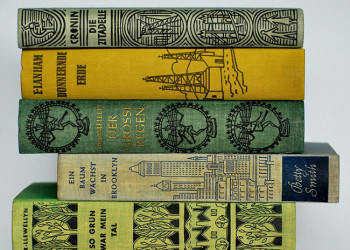
Even though the saying goes, you can’t judge a book by its cover, when you establish a unique look for your book’s cover it can actually become your hook!
For years, designers and publishers have gone for looks that will be consistent with the book’s content and encourage interest in the book itself.
There’s a whole lot of “real estate” on a book cover so think twice about how you’lll use this asset wisely.
A book cover is comprised of the front cover, the back cover and the spine. You may be thinking, “Jennifer, this is elementary!” And you’d be right, but these components deserve careful consideration, especially in the current day and age of publishing.
For hardcovers and paperbacks, the attraction starts with the front cover OR spine. If a book is put on the shelf with its spine facing out, you are limited to this itsy, bitsy amount of space to make a first impression on the buyer and reader. If you are fortunate to have your book face out on the shelf, then the front cover is your ticket to attracting the reader’s eye.
For the same book, if it is an ebook or if it is included in an online booksellers’ inventory, the front cover is your key to success since this is what the browsing reader who is looking for a great book will see.
The back cover, while effective in the physical bookseller where the consumer can pick up the book and turn it over, loses its value when it comes to the electronic world we live in.
Now I’m not saying that the back cover of your book is worthless. Hardly! The copy that you would use on your back cover – the text – is very valuable indeed. This is where you may include a synopsis, praise or bullet points about the contents of the book and story inside.
Book covers tend to house the brand identity of a writer’s work. Book brands that have multiple authors use book cover design to distinguish their books from others while keeping their presentation consistent to the consumer.
Today’s guest, John Kilcullen, was one of the key people behind the effective branding strategy of the …For Dummies books. While these books have different authors, the book brand itself is easily identifiable by its bright yellow color and its title on the chalkboard cover image. The icon of the Dummies guy is also just that – a recognizable icon that conjures up the brand identity of the …For Dummies books.
Other books like the …For Dummies books including The Complete Idiot’s Guide to… books which use orange, white and blue colors on their covers and which are published by Alpha and the …An Hour A Day social media and Internet-oriented books published by Sybex which have all developed a consistent, repeated design for their books that is recognizable to the purchaser as a reliable resource.
The funny thing about consistency in the look of your books is that this subtly conveys to the reader that if they enjoyed reading a previous book in the same series, they can be assured that the next one they buy will be just as good and provide a similar structure.
Now if you’re thinking this type of book cover and brand identity is only for nonfiction how-to books like these – think again.
Fiction books in a series and that are by a particular author have clear brand identities too. Oftentimes, the book covers will include a font type for the name of the author and the book title in certain positions so that each cover reflects the “brand” for that author. Take authors like James Patterson, David Baldacci, Patricia Cornwell, Clive Cussler and John Grisham. While the pictures on their book covers differ from book to book to reflect the image relevant to the story inside, the position of the book title and their names as authors of the books appear in the same places so as to provide a brand identity.
This also occurs in romance novels and their popular authors like Debbie Macomber, Nora Roberts, Robyn Carr, Jude Deveraux, Linda Howard and Julie Garwood. In Debbie Macomber’s Cedar Cove series, the pictures and the colors of each book may be different; however, it’s easy to distinguish these books and the series by Debbie’s name which appears prominently and in the same font on each book.
For you children’s authors, keep this strategy in mind for your books too! Dr. Seuss had his name prominently appear in the same font type and branding on all of his books that were produced with bright book covers and characters of all shapes and sizes. When his name appears on the book, parents know they can rely on a great reading experience for their young ones.
When you think about your books and how and where they will appear to a reader – whether it’s on the shelf of a physical bookseller, online at an Internet website or in an ereader catalogue, or at the library in your local city – be cognizant that your book cover can also be an important hook for your book!
Jennifer’s show can be heard every week on Tuesday mornings at 9am when it is broadcast on WomensRadio.com and syndicated on Google News and Live365.com. Each show is archived for replay listeners in different time zones and countries.
For more information on this Education Corner topic and others, please refer to www.YourBookIsYourHook.com/blog for more articles and resources to help you with your books.
Ten Myths About Agents
By Guest Blogger Jessica Faust
Literary Agent & Owner of BookEnds Literary Agency
www.bookends-inc.com
1. Not following an agent’s rules exactly will get you rejected.
Not true. Agents have a list of guidelines they’d like writers to follow when querying because it makes our lives easier and while we prefer you call us by the correct name, include the title of your book, or include your phone number, forgetting any of that will not result in an instant rejection. What will get you rejected is not exciting the agent enough about your work.
2. Agents never take risks.
Not true. Each and every submission we send out, each and every offer of representation we make is a risk. Agents take risks all the time, but educated and calculated risks. I can’t offer representation on a book I don’t understand well enough to sell, but there have been plenty of times I’ve offered on something I loved, but didn’t necessarily feel 100% confident I’d find a market for.
3. Agents blacklist authors and spread the news to other agents far and wide.
Not true. Frankly, if we’re talking or complaining about anyone it’s editors [wink]. Rarely, if ever, do we sit around together and share query horror stories.
4. Getting an agent is the hard part.
Wrong. Getting an agent is the easy part. The real hard part isn’t even finding a publisher. The hard part? Finding readers and keeping them.
5. Agents have all the power.
Really, really not true. You might think we do because when querying we frequently say no, but the truth is that you have all the power. Authors provide us with our product and without you we would have nothing. If you think we have all the power you should sit on our side of the desk when a call of representation is offered and the author is talking with other agents. Now who has the power?
6. If you get your own deal, you don’t need an agent.
I think this depends on you. A lot of people talk these days about how authors can negotiate their own contracts and certainly they can and I do believe that authors should spend more time learning about contracts, but, the question is, how comfortable are you doing that? My job is to negotiate and I’m pretty good at it. When it comes to your own career are you willing to push and fight as hard as you need to or is there a possibility the fear of angering editors might make you back off?
7. “Top Tier” Agents are always better.
This one confuses me because I never understand who this top tier is. The best agent is the one who is smart, tough, respected on all sides, honest, and works for you in a way that works for you. An agent’s “tier” doesn’t matter if the two of you can’t see eye to eye on most things.
8. With e-selfpublishing, agents will soon be extinct.
Maybe, but I doubt it. The publishing landscape is changing in new and exciting ways and rather than look at it as a time when everything is being torn down, I like to look at it as a time of new opportunity for everyone.
9. Agents won’t consider you unless you’ve been published.
Not true. In the past 9 months I’ve taken on three new authors, none are previously published.
10. An agent’s job is to do whatever the author says.
Not true. An agent’s job is to partner with the author to build a successful career and this sometimes means telling the author “no.”


